<DAMAGES> - SLAP ON THE WRIST
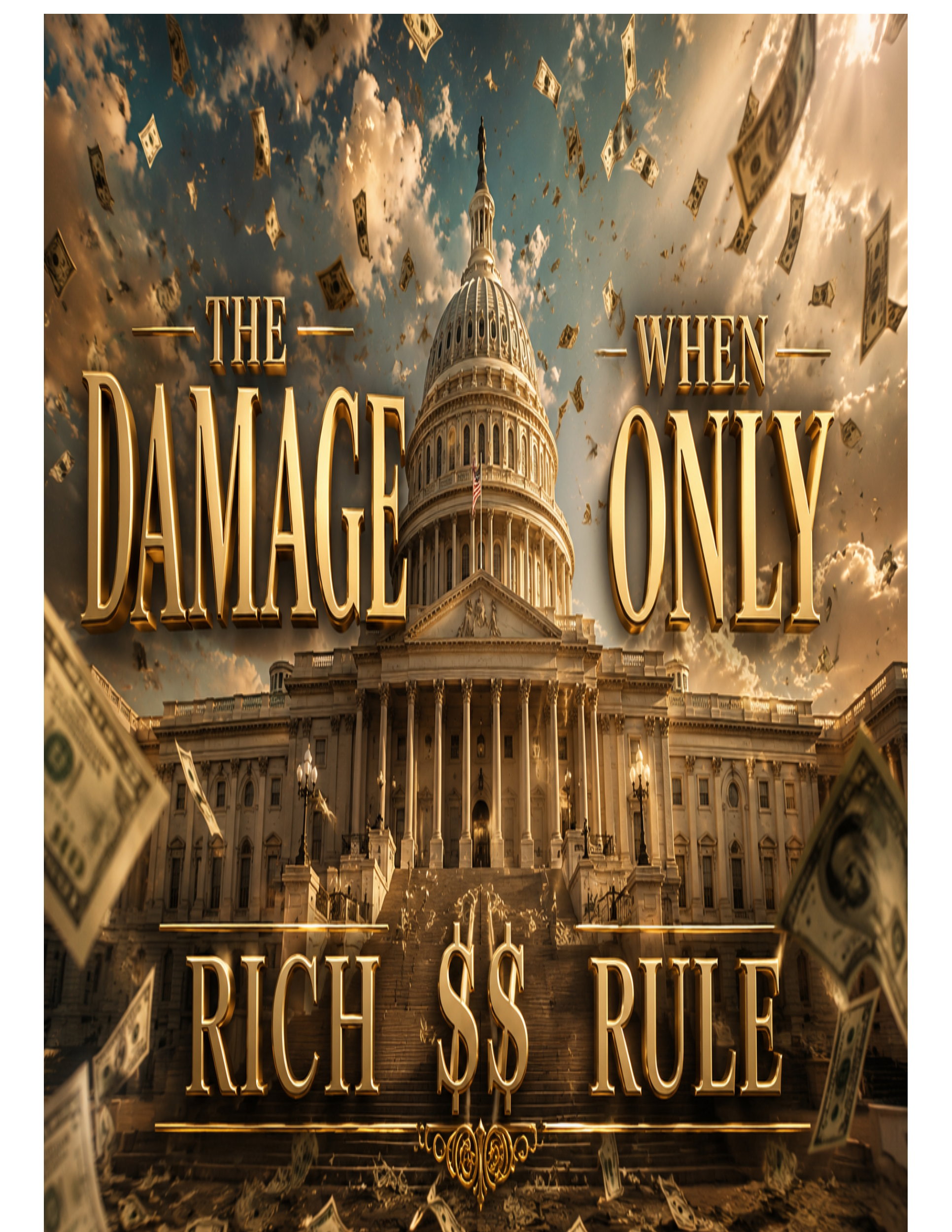
There was a time in America when the working class could believe in the American Dream. When children could expect to do better than their parents. A time when people could afford a home with a reasonable mortgage rate, when grocery prices afforded abundant nutrition. When parents could afford a vacation without breaking the bank. When they could save for the child's college education and the price of college was not through the roof. So when was that time?
The Years Blue and White Collar Workers Prospered.
The most favorable period for the U.S. working class was roughly 1946–1973, with the strongest years generally falling between 1950 and 1969. If one must identify a narrower “peak,” the mid-1960s—approximately 1964–1969—stand out.
This period combined several advantages:
Rapid wage growth: Inflation-adjusted pay for typical workers rose substantially, and productivity gains were more broadly shared with employees than they have been in recent decades.
Strong unions: Union membership covered roughly one-quarter to one-third of workers, giving employees greater bargaining power over wages, pensions, job security, and benefits. And non-union workers got the same benefits as union workers, because employers wanted to keep their own workers non-union.
Low unemployment: Unemployment was generally low, especially during the 1960s, strengthening workers’ ability to change jobs or demand raises.
Affordable housing: Home prices were relatively low compared with incomes, particularly outside major coastal cities.
Expanding benefits: Employer-provided health insurance, pensions, and paid leave became increasingly common.
Lower inequality: The gap between ordinary workers and top earners was considerably narrower than it is today. From 25 times then to 200+ times today.
Manufacturing strength: Well-paid industrial jobs were widely available to workers without a college degree.
The 1950s were especially favorable for stable employment, homeownership, and unionized industrial work, though prosperity was distributed unevenly: women, Black workers, agricultural laborers, and many nonunion workers often received fewer benefits. The 1960s were arguably better overall for wages and employment, particularly from 1964 through 1969, when unemployment was very low and economic growth was strong.
The period began deteriorating in the 1970s, especially after 1973, as inflation, globalization as corporations searched the world for the lowest wage rate people would accept, de-industrialization, declining union power, and slower productivity growth weakened workers’ position.
So the U.S. working class was economically strongest from about 1946 to 1973, with the peak years likely 1964–1969. This conclusion depends on how “favorable” is measured; a focus on homeownership might favor the 1950s, while wage growth and employment favor the mid-to-late 1960s.
But these favorable economic conditions were not bestowed by a benevolent Oligarch or Government. Frederick Douglas, the formerly enslaved abolitionist, orator, and writer said, "Power concedes nothing without a demand, it never has and never will"
Government Laws and Regulations.
Government Laws and Regulations and penalty enforcement that protect workers came about because workers pressured the governments. This required organizing, demanding, and civil disobedience. And workers paid a heavy price to get this done, through blood, sweat, tears and loss of life.
U.S. Laws, Agencies and Presidents that Protected Workers
Antitrust laws — 1890
President: Benjamin Harrison
The Sherman Antitrust Act prohibited agreements and business practices that restrained trade or created monopolies. Its purpose was to promote competition and prevent large companies from unfairly controlling markets.
The Clayton Antitrust Act of 1914 was enacted later under President Woodrow Wilson to strengthen the Sherman Antitrust Act and prevent anti-competitive practices in business. It specifically targeted practices that could lead to monopolies, such as price discrimination and certain types of mergers.
NLRB — 1935
President: Franklin D. Roosevelt
The National Labor Relations Act, also called the Wagner Act, created the National Labor Relations Board (NLRB). It protected private-sector employees’ rights to organize unions, choose representatives, bargain collectively, and engage in concerted labor activities. The NLRB conducts union elections, investigates unfair labor practices, and helps resolve labor disputes.
OSHA — 1970
President: Richard M. Nixon
The Occupational Safety and Health Act created the Occupational Safety and Health Administration (OSHA). It established federal workplace-safety standards, required employers to provide safe working conditions, authorized workplace inspections, and gave employees rights related to safety and health protections.
Anti-Trust, National Labor Relations Board, Occupation Health and Safety Act, and Regulations, with Enforced Breakups, Fines and Operational Rules kept the Corporations from inflicting damages on the Working Class. This period lasted from the late 1940s to the late 1970s.
For example,
Standard Oil was broken into smaller Corporations. The same happened to "Ma-Bell" (American Telephone and Telegraph). And later, Microsoft had limitations put on it's move to dominate the Operating System of the Desktop Computers.
During this period the Working Class had potential for realizing the American Dream.
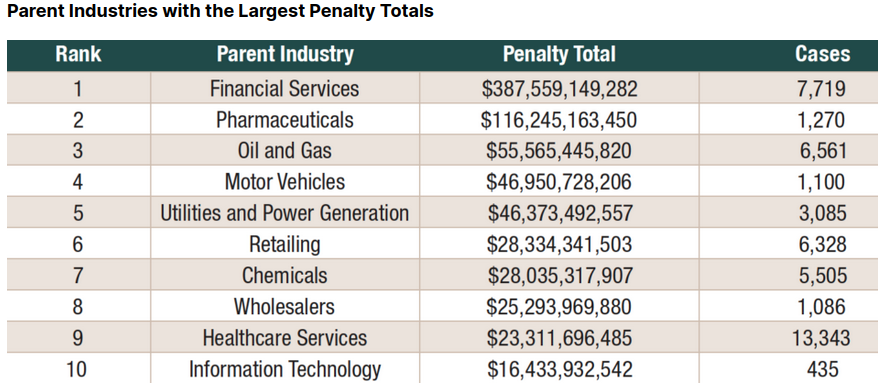
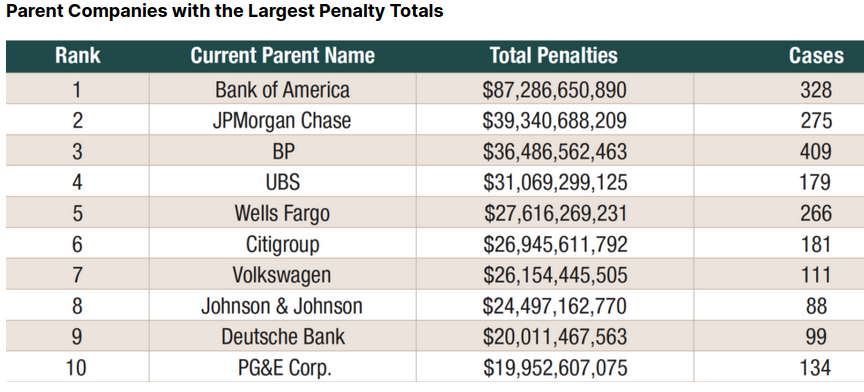
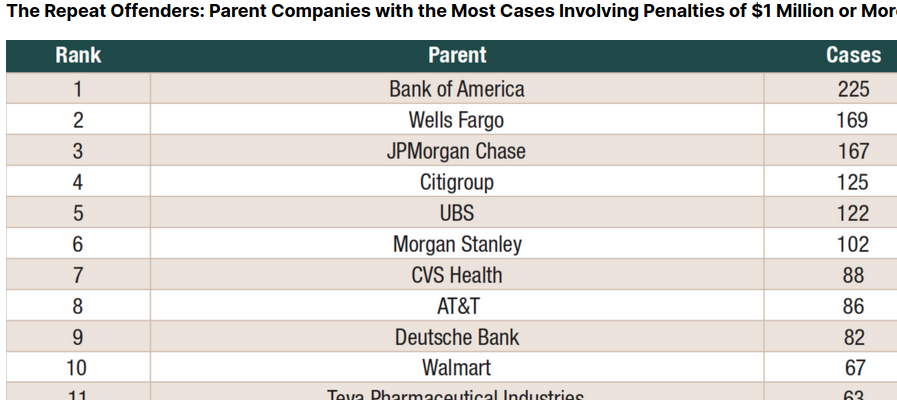
Following are some of the Enforcement Penalties against Corporations due to their Predatory Activities:
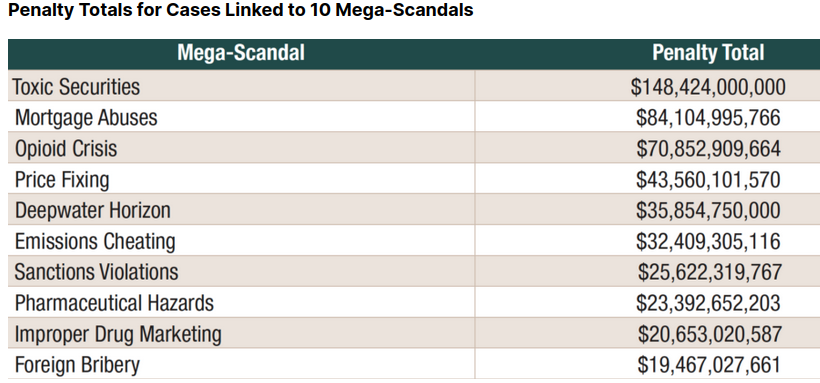
Remember: These fines are Just-A-Slap-On-The-Wrist, as Corporate Revenues are far greater in these companies. And almost NO-ONE goes to JAIL. Thus the corporations consider these as "Cost of Doing Damages". Often, they are put under Differed Prosecution Agreements where if they clean up their act, they won't be prosecuted. Many of them go back to their illicit activities, but are never prosecuted.
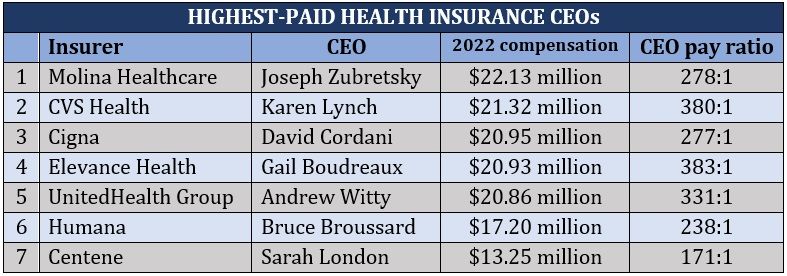
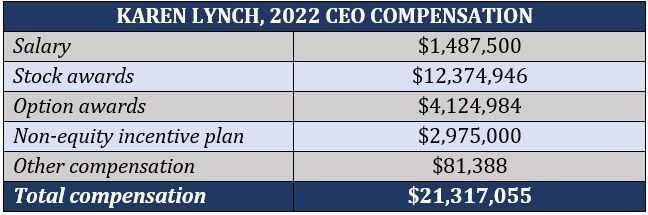
Following are CEO Payments. How do they compare to your Salary?
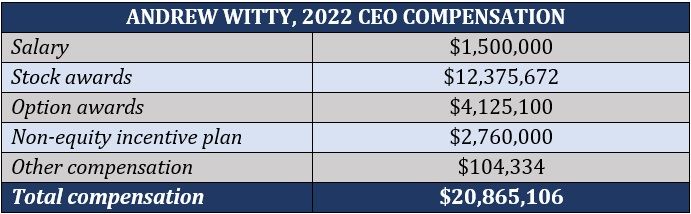
United Health CEO:
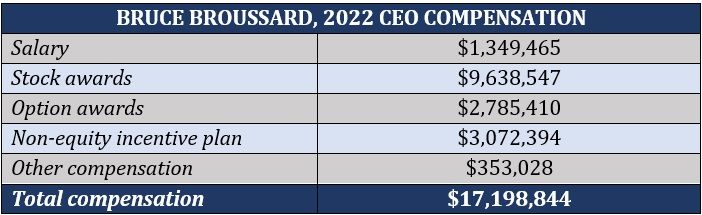
Humana CEO:
CVS CEO:
--||--
I highly recommend you read the following E-Book, detailing the Major Damages done to the American Citizens When Only the Rich Rule.
Among other things, find out the STEALTH WEAPON used by the Super Rich, that was implemented on December 23rd 1913, in violation of the United States Constitution.
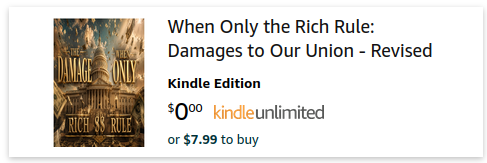
You'll take a deep dive into the Corporate Monopolies price gouging everything about your life. That which you read there is just a sliver of actions corporate monopolies use to boost your misery index.
You may purchase this book for about the cost of two coffees. CAUTION: By the time you finish this book, your blood may begin to boil. This is an E-book that can read with your desktop or phone or Tablet browser.
However, if Money is Tight, you may get it for free by going to the home page and scroll to bottom where you can send an email. Just put the words "Send me the PDF Book" in the First Line of the email.
Your email address will never be sold or shared.